
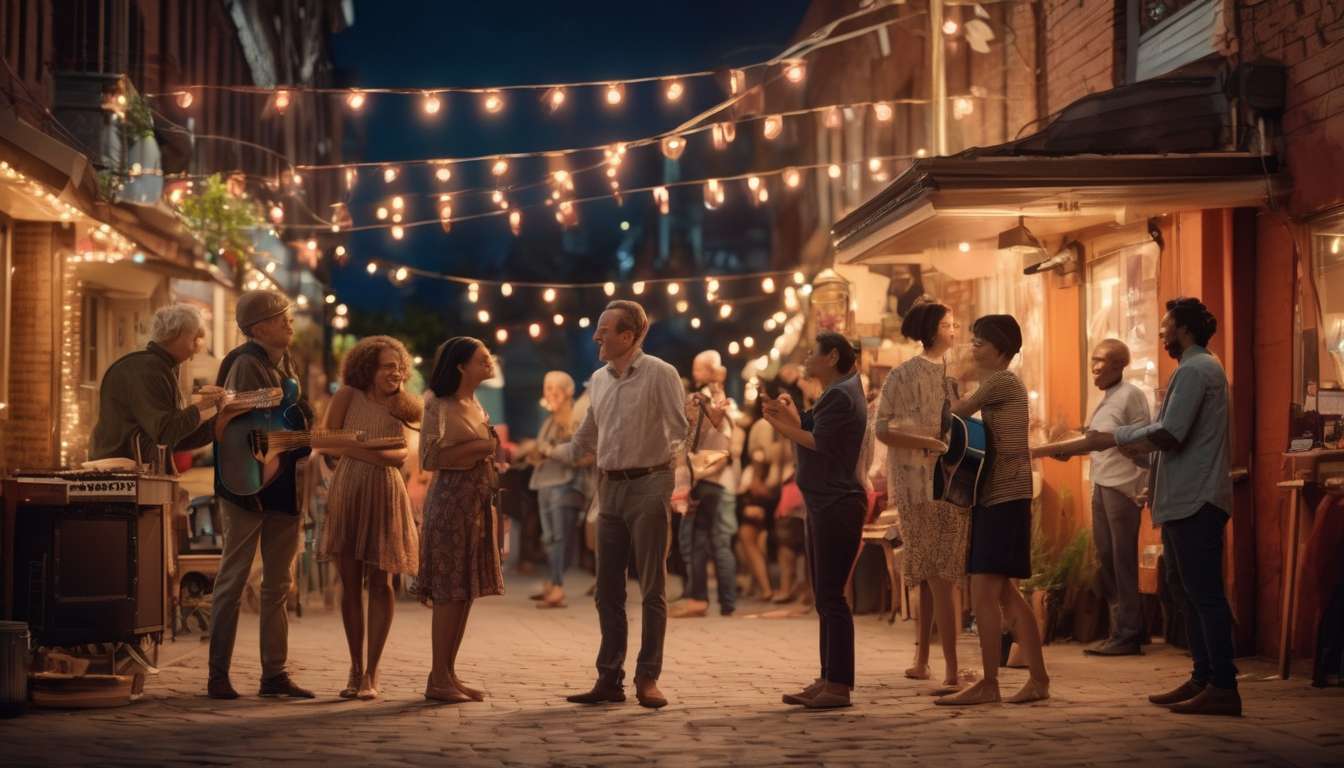
But can a local dance hall truly become a cornerstone of neighborhood trust rather than a source of noise and nuisance?
We ask this because licensed dance establishments are often framed as polarizing, yet community engagement offers a clear path to mutual benefit.
We envision venues that open their doors not only for entertainment but for dialogue, safety planning, and shared cultural events.
By collaborating with residents, businesses, and law enforcement, we can address concerns about noise, crowds, and safety while preserving artistic expression and economic opportunity.
Our experience shows that when clubs and halls listen and participate, tensions ease and trust deepens.
This article explores practical strategies and real-world examples of how proactive outreach, transparent licensing practices, and joint problem-solving transform perceptions.
Together, we can reimagine nightlife as a collaborative asset that strengthens community bonds and supports vibrant, safe public life.
Why Engagement Matters
We build trust and ensure safety by actively involving the community in how licensed dance venues operate and evolve.
Belonging grows when neighbors, patrons, and staff all have a voice. Community engagement gives shared ownership of public spaces so concerns get heard and solutions get adopted rather than imposed.
We prioritize licensing transparency so everyone understands rules, limits, and recourse. That clarity reduces suspicion and strengthens cooperation.
We tackle noise mitigation collaboratively to balance vibrant nights with residents’ need for rest. This includes:
- testing schedules,
- trying soundproofing options,
- establishing agreed complaint pathways.
Inviting community input into permits and operating practices helps us spot problems early and adapt faster. That process builds routines that respect diverse needs.
We’re committed to regular forums, clear reporting channels, and published outcomes so people see their contributions matter. Steady, practical collaboration transforms potential conflict into mutual responsibility and keeps licensed dance venues thriving as welcoming, safe places for all.
Mapping Community Concerns
We will map local concerns by gathering where issues occur, who’s affected, and how often problems repeat so we can prioritize workable solutions.
We listen to neighbors, patrons, staff, and nearby businesses to build a shared picture of impact and opportunity.
Through community engagement, we collect:
- specific locations
- typical hours
- descriptions of disturbances
so patterns emerge rather than anecdotes.
We record who feels most affected — families, late-shift workers, people with sensory sensitivities — and note repeat incidents to target resources.
We’ll also document successful noise mitigation already in place so we can scale what works and adapt where it doesn’t.
By keeping data clear and accessible, we strengthen trust and help everyone feel included in decisions that shape their neighborhood.
This mapping isn’t about assigning blame; it’s about measurable steps that respect both vibrant nightlife and local comfort.
Our goal is a shared map that guides solutions while supporting:
- inclusive dialogue
- future licensing transparency discussions
Building Transparent Licensing
We will publish clear licensing criteria, timelines, and decision rationales so neighbors and operators can see exactly how approvals and conditions are determined.
We will provide plain‑language guides, FAQs, regular briefings, and a shared online dashboard so everyone feels included and informed.
By centering community engagement in those materials, we will acknowledge local priorities and show how they shape outcomes.
We will explain how noise mitigation expectations and enforcement procedures factor into licenses, including:
- measurable standards (e.g., decibel thresholds, measurement locations)
- recommended equipment or design options (e.g., soundproofing materials, speaker orientation)
- enforcement steps and responsible agencies
When conditions are imposed, we will attach the specific evidence or complaints that prompted them and the steps required to lift or modify restrictions.
We will invite community representatives and operators to review draft policies before they are final, and we will publish timelines for appeals and renewals.
The result: licensing transparency as a living practice — predictable, accountable, and respectful of both neighbors seeking calm and venues seeking certainty.
Collaborative Safety Planning
We will bring neighbors, venue operators, law enforcement, and health providers together to co-design safety plans that prevent incidents, reduce harms, and ensure clear roles during events.
We center community engagement so everyone feels heard and invested in practical solutions.
Together we will map entry and exit flows, outline emergency communication channels, and set staffing expectations that balance patron experience with public safety.
We will link plans to licensing transparency by documenting agreed procedures in permit addenda and sharing them publicly, which builds accountability and trust.
We commit to regular joint trainings and post-event reviews so plans evolve with real-world lessons.
We will address impacts on surrounding residents, coordinating on predictable schedules and response protocols that acknowledge sleep, access, and well-being concerns.
We will define clear responsibilities so that, while respecting artistic expression, it is unambiguous:
- Who calls emergency services
- Who manages crowd control
- Who communicates with neighbors
By embedding shared decision-making and measurable checkpoints into safety plans, we create a safer, more connected environment where everyone belongs and contributes to lasting, responsible nightlife.
Noise Mitigation Strategies
We will implement practical, evidence-based measures to reduce sound spill from licensed dance venues while preserving artistic integrity and patron experience.
Community engagement will guide priorities.
- We’ll survey neighbors and patrons so their lived experience directs our focus.
- Feedback will identify peak hours, problematic frequencies, and specific problem areas.
Objective monitoring will inform tailored interventions.
- We’ll pair community input with decibel monitoring and timed sound limits.
- Monitoring will target identified hours and frequency bands.
We will deploy certified acoustic treatments that reduce transmission without dulling performance.
- Door seals, baffles, and isolation pads to block paths of sound.
- Other treatments selected to preserve acoustics and artistic quality.
We will publish clear protocols and results to reinforce licensing transparency.
- Make limits, monitoring data, and applied remedies easily accessible.
- Regular reporting so residents and regulators can see progress.
Staff training and programming strategies will manage volume proactively.
- Train staff to operate sound systems and enforce limits in real time.
- Rotate programming to respect sensitive windows identified by the community.
- Use in-house technology for live adjustments based on monitoring feedback.
When disputes arise, quick-response panels will troubleshoot and verify fixes.
- Panels composed of residents, venue staff, and regulators.
- Rapid verification and remediation processes to resolve issues promptly.
Our approach centers mutual respect and durable outcomes.
- Neighbors feel heard through engagement and transparency.
- Artists remain supported by interventions that preserve performance quality.
- Venues meet obligations while maintaining vibrant programming.
By combining technical fixes, open data, and ongoing dialogue, we create durable noise mitigation that strengthens trust and belonging.
Cultural Programming Partnerships
Partnerships with local arts organizations, cultural groups, and artists
We’ll partner with local arts organizations, cultural groups, and artists to co-create programming that reflects neighborhood diversity and strengthens ties between venues and residents. These partnerships will turn isolated permit compliance into living collaborations that strengthen trust and sustain creative nightlife for the long term.
Regular, predictable programming to invite neighbors in
We’ll design regular events — dance nights, workshops, pop-ups — that invite neighbors in, share cultural practices, and create predictable rhythms the whole block can count on. By offering consistent opportunities to participate, venues become familiar community fixtures rather than occasional disruptions.
Community engagement embedded in planning
We’ll embed community engagement into planning meetings, invite feedback, and rotate leadership so programming genuinely represents voices across ages and backgrounds. This ensures decision-making is inclusive and responsive over time.
Transparency in licensing and operations
We’ll model licensing transparency by sharing permit processes, schedules, and safety plans so residents know what to expect and how to participate. Clear information reduces uncertainty and makes it easier for neighbors to engage constructively.
Coordination on noise and safety
We’ll coordinate with sound professionals and nearby institutions to align programming with agreed noise mitigation measures, minimizing disruption while preserving lively expression. This includes:
- Sharing sound-management techniques and schedules
- Consulting nearby institutions on sensitive times and events
- Implementing agreed mitigation (e.g., directional speakers, curfews) where appropriate
Centering belonging and mutual benefits
By centering belonging, we’ll make spaces where everyone feels welcome and invested:
- Artists gain stable platforms
- Neighbors regain confidence that venues respect local life
- Regulators see proactive collaboration
These outcomes reinforce one another and help sustain creative nightlife that benefits the whole neighborhood.
Measuring Trust and Impact
We’ll track measurable indicators of trust and neighborhood impact to ensure our partnerships actually improve relationships and quality of life.
Key metrics (quantitative):
- Resident surveys about feeling heard.
- Repeat participation in meetings.
- Complaint response times.
- Changes in reported disturbances.
We’ll pair quantitative data with stories to capture human experience.
- Short interviews that document belonging, respect, and whether people feel safer sharing concerns.
For licensed venues, we’ll monitor licensing transparency.
- Check whether permit details, operating hours, and compliance records are publicly accessible and easy to understand.
- Audit noise mitigation efforts against agreed standards.
- Log results from decibel checks and mitigation installations.
We will set regular review points for stakeholders.
- Share results.
- Adjust actions.
- Co-create next steps.
By measuring both technical outcomes and human experiences, we will ensure accountability and demonstrate impact:
- Strengthened relationships.
- Reduced friction.
- A neighborhood where everyone feels included and respected.
Sustaining Long‑Term Relationships
Commit to regular check‑ins, shared decision‑making, and clear conflict‑resolution and celebration processes.
Routines that honor everyone’s time
- Monthly community engagement forums
- Quarterly reviews with license holders
- Annual surveys measuring how valued neighbors feel
Document agreements and track follow‑through
- Maintain written agreements so goodwill doesn’t fade
- Publish simple, regular updates to keep licensing transparency real, not rhetorical
Use agreed mediation steps and data‑driven assessments when tensions arise
- Apply mediation steps for disputes over programming, hours, or noise
- Use data tied to noise mitigation plans to inform decisions
Co‑design practical solutions with residents and dancers
- Invite co‑design for soundproofing timelines and staggered exits
- Create ownership and belonging through collaborative problem‑solving
Recognize contributions and distribute power
- Publicly acknowledge contributions
- Rotate roles to keep power distributed
Keep commitments visible and learn from setbacks
- Make commitments and follow‑through transparent
- Review outcomes and evolve policies together
- Sustain trust to create licensed dance spaces that feel safe, accountable, and rooted in shared community values
How does the cost of implementing community engagement initiatives typically get covered, and can small venue owners access funding or grants to help?
We fund community engagement through a mix of sources.
Venue budgets, ticketed events, sponsorships, and volunteer time are primary revenue channels.
We also seek in-kind support such as donated space and marketing to reduce costs and increase reach.
We pursue a variety of grant and funding opportunities.
Local arts grants, small-business relief, cultural funds, and community foundations are regular targets.
We frequently partner with nonprofits to access joint funding and expand eligibility.
When budgets are tight, we use smaller, flexible approaches.
- Apply for microgrants.
- Crowdsource funding locally.
- Keep the process inclusive and collaborative to ensure broad participation.
What specific legal or liability issues should venue owners be aware of when hosting community meetings, and do they need special insurance or waivers for collaborative events?
Liability for injuries:
You should assess who could be held responsible if someone is injured at the meeting — hosts, venue owners, vendors, or volunteers. General liability insurance is commonly used to cover bodily injury and property damage, and event-specific endorsements (or short‑term event policies) can fill gaps for larger or higher‑risk gatherings.
Alcohol and permits:
If alcohol will be served or sold, check local liquor licensing rules and whether a temporary liquor license, a licensed caterer, or a licensed vendor is required. Dram shop or liquor liability exposure may apply, so consider adding liquor liability coverage or requiring vendors to carry their own.
Noise, crowd capacity, and public assembly rules:
Confirm local ordinances about noise limits, curfews, required permits for public assemblies, and maximum occupancy or crowd capacity for the chosen venue. Special event permits or police/fire approvals may be required for large crowds, amplified sound, street closures, or portable staging.
Privacy and defamation risks from speakers:
Speakers can create legal exposure for the host if they make defamatory statements or improperly collect or disclose personal information. Mitigate this by establishing speaker guidelines, limiting recording or press access, posting privacy notices, and including disclaimers where appropriate.
Steps to take:
- Check local ordinances, liquor and public assembly rules, and any venue licensing or lease conditions.
- Obtain general liability insurance and evaluate event-specific endorsements (including liquor liability if applicable).
- Use vendor/venue indemnity and insurance requirements in contracts and require certificates of insurance from vendors when needed.
- Consider participant waivers for risky activities and consult a lawyer to draft and review waiver language.
- Develop policies for speakers and privacy (recording, data collection, publicity) and have a plan for crowd control and safety.
Consult counsel:
For tailored coverage, waiver language, and compliance steps, consult an attorney experienced in events and insurance law so your policies and documents reflect local rules and the specific risks of your meetings.
How can neighboring residents who are not tech-savvy or who don’t speak the dominant language best participate in engagement efforts, and are there examples of successful inclusive outreach methods?
We’ll make outreach simple, welcoming, and multilingual so everyone can join.
We’ll host in-person drop-ins, bilingual flyers, phone trees, and trusted community liaisons to explain topics.
We’ll offer interpretation, childcare, and flexible times, and use visuals rather than jargon.
We’ve seen success with door-to-door visits, neighborhood ambassadors, and pop-up tables at local events; those approaches help non-tech and non-dominant-language residents feel included and heard.
Conclusion
You’ve seen how meaningful engagement transforms licensed dance establishments into trusted, valued places.
By mapping concerns, making licensing transparent, co-designing safety plans, and tackling noise together, you build shared ownership.
Partnering on cultural programs and measuring trust keeps progress honest and visible.
Keep investing time and listening—those sustained relationships turn friction into collaboration, protect community character, and ensure dance venues thrive as safe, vibrant parts of the neighborhood.