
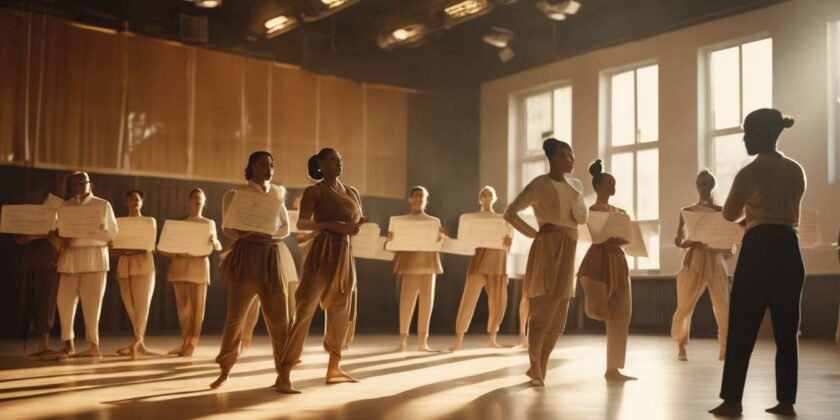
Pivotal studies show that dancers affiliated with professional associations are 40% less likely to suffer career-ending injuries than their unaffiliated peers.
We believe this statistic illustrates the often-overlooked power of organized support. Industry associations do more than lobby or host events—they codify safety protocols, standardize training curricula, and create clear ethical guidelines that protect artists.
As practitioners, educators, and advocates, we recognize that consistency in standards elevates the craft and preserves livelihoods. By uniting schools, companies, and freelance performers under shared expectations, associations:
- streamline certification pathways,
- foster trust between artists and audiences,
- promote equitable access to resources.
Our aim in this article is to examine how these bodies develop professional benchmarks, enforce accountability, and adapt standards to diverse dance forms and cultural contexts.
We will also consider challenges—such as balancing regulation with creative freedom—and offer insights into how collective governance can sustain both excellence and innovation in dance.
Role of Associations
Industry associations set standards and advocate for dancers’ rights.
We create shared frameworks—dance standards that guide training, auditioning, and performance—so everyone knows what excellence looks like.
We champion dancer safety and well-being.
We promote policies and environments that minimize risk and ensure access to appropriate medical and mental-health support.
We reinforce professional ethics and trust.
Through workshops, certification, and clear codes, we protect both artists and institutions and foster trust among peers and employers.
We build networks for mentorship, feedback, and accountability.
- Members exchange feedback and mentor emerging talent.
- Members hold one another accountable to agreed norms.
We provide practical resources and dispute-resolution support.
- Toolkits and model contracts help members navigate professional agreements.
- Dispute-resolution avenues ensure members feel supported when challenges arise.
We convene conversations to keep the field current and inclusive.
We organize conferences and panels that reflect diverse voices across genres and career stages.
Our mission: belonging, integrity, and artistic growth.
We act together to lift standards and protect the people who bring dance to life.
Safety and Injury Prevention
We prioritize evidence-based practices and proactive protocols that prevent injuries and keep bodies performing across careers.
We set clear dance standards that include:
- Warm-up routines.
- Load management.
- Rest policies.
- Environmental controls.
These standards ensure everyone feels supported and protected.
We share injury-prevention resources and foster peer mentorship because belonging speeds recovery and encourages honest reporting of pain or fatigue.
We embed dancer safety into codes of conduct and training for employers, choreographers, and medical partners.
Training and policies align with professional ethics and emphasize:
- Respect for autonomy.
- Confidentiality.
- Informed consent.
We collect and disseminate anonymized injury data to guide programming and reduce risk without singling anyone out.
We advocate for workplace accommodations, safe rehearsal schedules, and access to qualified clinicians to ensure no one faces barriers to care.
We promote a culture where asking for help is standard practice, not a weakness, and where collective responsibility upholds both artistic excellence and long careers in dance.
Training and Certification
We establish rigorous training pathways and transparent certification processes.
- Competency benchmarks: Set clear standards for technical skill, pedagogy, and safety.
- Instructor verification: Verify instructor qualifications and require documented expertise.
- Ongoing professional development: Ensure continuing education is part of maintaining certification.
We design curricula aligned with dance standards that balance technical mastery, artistic expression, and injury-awareness practices.
- Technical mastery: Progressive skill development and measurable outcomes.
- Artistic expression: Modules that cultivate performance quality and creative development.
- Injury-awareness practices: Integrate anatomy, safe progressions, and recovery strategies.
We create tiered certifications so members know where they fit and how to advance.
- Each level requires demonstrated skills.
- Each level includes pedagogy assessments.
- Each level mandates documented continuing education.
We prioritize dancer safety through mandatory modules and regular recertification.
- Mandatory safety modules: Anatomy, safe progressions, recovery, and injury prevention.
- Regular recertification: Keeps knowledge and reflexes current and responsive to evolving best practices.
We offer mentorship, peer review, and professional-ethics education to support members.
- Mentorship and peer review: Provide supportive feedback, guidance, and community accountability.
- Professional ethics: Teach respectful workplace practices and accountability without dictating personal values.
We keep processes transparent and accessible, with clear remediation and appeals.
- Transparent processes: Open criteria and clearly published requirements.
- Accessible preparation materials: Resources for members at all levels to prepare and advance.
- Appeals and remediation paths: Clear, fair procedures so committed individuals can belong, contribute, and thrive within shared standards.
Ethical Standards
We commit to clear, enforceable ethical standards that protect members’ dignity, promote equitable treatment, and hold organizations and individuals accountable.
We define practical codes that guide behavior in rehearsal rooms, auditions, and performances so everyone feels respected and included.
Our policies tie directly to dance standards, ensuring technique and artistry never excuse coercion or intimidation.
We prioritize dancer safety by specifying boundaries, consent practices, and reporting channels, and we train leaders to respond promptly and fairly.
We cultivate a culture where professional ethics are lived daily:
- Transparent contracts
- Conflict-of-interest disclosures
- Impartial complaint processes
We’ll provide accessible resources and regular reviews so members know expectations and consequences.
When misconduct occurs, we enforce proportionate penalties and offer restorative options that center healing and accountability.
By holding one another to shared principles, we strengthen trust, preserve careers, and sustain a supportive community committed to excellence and the wellbeing of every dancer.
Equity and Access
Equitable access to opportunity
We’ll ensure equitable access to training, performance, and leadership opportunities so talent — not background or resources — determines who succeeds.
- We commit to removing systemic barriers by expanding scholarships, outreach, and sliding-scale programs.
- We will partner with community organizations to reach underrepresented artists.
- We’ll embed inclusive hiring and audition practices that reflect clear dance standards while recognizing diverse movement vocabularies.
Dancer safety and support
We’ll prioritize dancer safety by offering accessible medical, mental health, and rest resources, and by making injury prevention and recovery support available regardless of contract size.
- Accessible medical care and mental-health services for all dancers.
- Rest and recovery policies that apply across contract levels.
- Injury-prevention programming and equitable access to rehabilitation.
Mentorship and leadership development
We’ll design mentorship and leadership pathways that uplift emerging leaders from all backgrounds and provide transparent criteria tied to professional ethics and competency rather than gatekeeping networks.
- Clear, published criteria for advancement and leadership roles.
- Mentorship programs with measurable goals and regular review.
- Leadership training that centers ethics, inclusivity, and professional competency.
Belonging, culture, and accountability
We’ll foster environments where everyone feels they belong: studios and companies will adopt anti-discrimination policies, provide cultural competency training, and solicit ongoing community feedback.
- Anti-discrimination policies with clear reporting and remediation processes.
- Regular cultural competency and anti-bias training for staff and artists.
- Ongoing community feedback mechanisms and periodic public reporting.
Integrated commitment
By aligning equity efforts with rigorous dance standards, dancer safety, and professional ethics, we’ll build a healthier, more diverse field where talent and care determine professional growth.
Accountability Mechanisms
Accountability mechanisms will be clear and transparent.
We’ll establish regular audits, public reporting, and enforceable consequences so organizations and individuals are held to the standards we set.
We’ll publish audit criteria and outcomes in accessible formats so members feel informed and included rather than policed.
Processes will be consistent and centered on dancer safety and professional ethics.
We’ll create consistent processes that reinforce dance standards, protect dancer safety, and uphold professional ethics across companies, schools, and freelance networks.
Sanctions and remediation will be fair, graduated, and focused on restoration.
We’ll set graduated, fair sanctions and remediation paths that prioritize restoration and learning when breaches occur, and immediate protective action when safety is at risk.
Oversight will be participatory and community-driven.
We’ll form peer review panels and include dancer representatives in oversight roles, making accountability participatory and community-driven.
Data will be used to improve practice and recognize excellence.
We’ll track compliance data to spot patterns, improve training, and celebrate exemplary practice.
Clear responsibilities and predictable consequences will build trust.
By making responsibilities clear and consequences predictable, we’ll encourage reporting without fear and foster a culture where standards are shared commitments to each other’s wellbeing and professional integrity.
Adapting to Diversity
We’ll adapt guidelines and practices to respect diverse bodies, cultures, abilities, and career paths so every dancer can thrive.
We’ll listen and co-create inclusive dance standards that reflect varied techniques, cultural traditions, gender expressions, and career stages.
We commit to practical policies that protect dancer safety, including:
- Accessible rehearsal and performance spaces.
- Tailored injury-prevention protocols and rehabilitation supports.
- Training for educators and choreographers to work respectfully across difference.
We’ll embed cultural humility and equity into professional ethics, ensuring:
- Accountability when harm occurs.
- Clear expectations and processes around consent, credit, and compensation.
We’ll support mentorship and peer networks that help underrepresented artists navigate auditions, contracts, and career transitions without forcing assimilation.
We’ll review certification, assessment, and audition practices to remove unnecessary barriers while upholding clear expectations for skill, conduct, and safety.
By centering belonging, transparency, and measurable outcomes, we’ll make industry standards responsive and fair so everyone who dances has the dignity, protection, and opportunity to pursue their art.
Balancing Regulation and Creativity
We’ll strike a clear balance between necessary regulations and creative freedom so rules protect people without stifling artistic risk and innovation.
We believe that shared dance standards can create a common language that supports experimentation rather than limits it.
By embedding dancer safety into rehearsal protocols and staging practices, we protect bodies while encouraging bold choreography.
We’ll develop practical guidelines rooted in professional ethics that respect artistic intent and ensure fair treatment, informed consent, and transparent communication.
Together we’ll craft policies that are scalable and adaptable, so companies of all sizes feel included and supported.
We’ll offer workshops and peer review rather than punitive oversight, fostering trust and mutual accountability.
When rules are co-created by artists and administrators, they feel like community agreements, not imposed constraints.
That collaborative approach helps us maintain high standards without dampening creativity, ensuring every member can take risks within a framework that values respect, health, and integrity.
How do dance industry associations influence the commercial pricing and fee structures for freelance dancers and independent choreographers?
Associations share benchmarks, model contracts, and rate guidelines that members can adopt to influence pay and fees.
We use those resources to negotiate fairer wages, standardize session and rehearsal fees, and push for transparent booking terms.
We pool data to argue for living wages and advocate for collective bargaining where possible, so freelance dancers and independent choreographers get predictable, equitable compensation and clearer expense reimbursements.
What specific legal services or representation (e.g., contract negotiation, intellectual property disputes) do associations provide, and are those services free, subsidized, or fee-based?
What legal help associations provide
Contract review and negotiation:
- Associations offer contract review and negotiation assistance to help members understand and improve terms.
- This service is often available through hotlines, clinics, or template agreements.
Intellectual property (IP) advice:
- Associations provide guidance on IP issues, including strategy and basic filings.
- IP advice may be delivered via clinics, written materials, or hotline consultations.
Dispute mediation:
- Associations run mediation programs to resolve conflicts without litigation.
- Mediation is commonly offered as a subsidized service for members.
Referrals to specialized counsel:
- Associations refer members to panel attorneys or outside specialists for complex matters.
- Deep representation or court work is typically handled by these referred counsel.
How these services are paid for
Free or subsidized options:
- Hotlines, clinics, template agreements, and basic advice are often free or subsidized for members.
- Mediation and certain member services may be offered at reduced rates.
Fee-based services:
- In-depth representation, litigation, and court work usually require fees.
- Associations commonly arrange reduced-rate services through panel attorneys for members.
Additional member support
Lobbying:
- Associations lobby on behalf of members to influence policy and protect interests.
- This activity is part of member advocacy and funded through dues or association budgets.
Insurance options:
- Associations may offer or arrange insurance programs relevant to members (e.g., liability, E&O).
- Insurance is typically purchased separately and is fee-based.
How do associations support dancers transitioning into non-performance careers (e.g., administration, education, therapy), including career counseling or retraining programs?
Associations offer tailored transition support for dancers.
Key services include:
- Career counseling, mentorships, and job-placement networks that connect dancers to administrative, teaching, and therapy roles.
- Retraining workshops and certificate courses, often in partnership with universities to create credit pathways.
- Subsidies and scholarships to reduce financial barriers to retraining.
Additional supports to build confidence and employability:
- Alumni panels that share real-world transition stories.
- Resume and interview clinics to improve job-application skills.
- Internship placements to provide hands-on experience and professional connections.
Overall impact: These combined services help members feel guided, valued, and confident stepping into sustainable post-performance careers.
Conclusion
Industry associations safeguard dancers’ well-being by promoting safety, training, and ethical standards while expanding access and accountability.
They help prevent injury, certify skills, and set equitable practices without stifling creativity.
As diversity grows, associations adapt policies and oversight to reflect varied needs.
You can rely on them to balance regulation and artistic freedom, ensuring the dance world remains professional, inclusive, and vibrant for performers and audiences alike.