
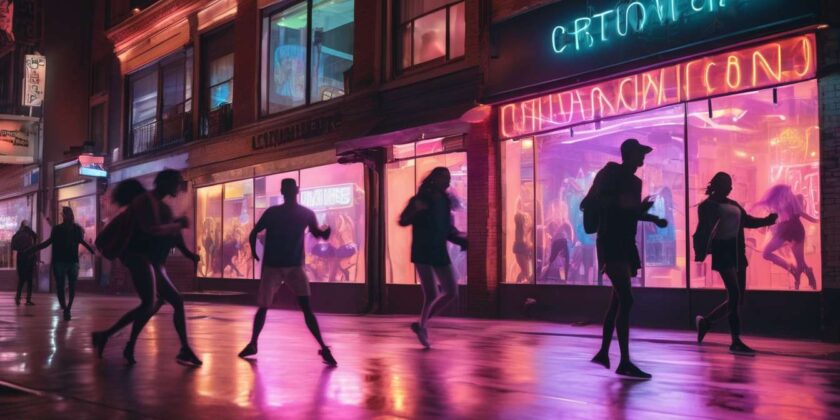
Online outreach is not just a supplement to our marketing toolbox; it is the force rewriting the rulebook for licensed dance establishments.
We have watched venues that relied on flyers and word-of-mouth pivot overnight, leveraging:
- targeted ads,
- live-streamed lessons,
- influencer partnerships
to fill floors and create loyal communities.
We believe this shift demands more than digital presence—it requires choreography between data, storytelling, and authenticity.
As operators and marketers, we must translate the sensual immediacy of a dance hall into pixel-perfect experiences that still feel human, by delivering:
- timely social content,
- seamless booking interfaces,
- virtual events that convert curious viewers into returning patrons.
We must also confront regulatory nuances and community expectations unique to licensed venues, balancing promotion with:
- safety,
- compliance,
- community trust.
By treating online outreach as an adaptive performance rather than a campaign checklist, we can craft strategies that amplify atmosphere, extend reach, and ensure our establishments remain vibrant, profitable centers of culture.
Digital Identity Essentials
We’ll establish a clear, consistent digital identity—name, logo, color palette, and tone—that customers instantly recognize across your website, social profiles, and listings.
We’ll craft a welcoming voice that invites patrons into the community and signals safety, professionalism, and the excitement of licensed dance marketing.
We’ll design logo and color choices to reflect the venue’s vibe so regulars feel at home and newcomers see where they belong.
We’ll map user journeys that connect social storytelling to practical actions.
- Highlight class highlights, performer spotlights, and community moments that nudge people toward online booking funnels without feeling transactional.
- Drive storytelling toward clear next steps (book, inquire, follow) while preserving authenticity.
We’ll standardize profile bios, photo styles, and event descriptions so every touchpoint reinforces trust and licensure.
We’ll monitor consistency across directories and reviews and fix disparities quickly to protect credibility.
By aligning aesthetic, message, and functionality, we’ll create a recognizable digital presence that draws people into a dependable, welcoming dance community and makes joining effortless.
Targeted Advertising Tactics
Target the right local audiences with paid ads, precise segments, and creative formats.
We use neighborhood geofencing, interest clusters (dance styles, nightlife seekers, event planners), and lookalike audiences built from our best patrons to reach nearby, high-value prospects.
We A/B test ad creative and calls-to-action to reduce wasted spend and feed high-intent traffic into optimized online booking funnels that make reserving a table or booth effortless.
Craft licensed dance marketing campaigns that feel like invitations — not interruptions.
- Use storytelling and visuals that reflect the venue’s vibe and community.
- Choose creative formats (video, carousel, event ads) that drive engagement and RSVPs.
- Maintain cohesive social storytelling across channels to build recognition and trust.
Prioritize messaging that fosters belonging and rewards attendance.
- Welcome offers for first-timers.
- Group discounts for regulars.
- Retention sequences that reward loyalty and encourage repeat visits.
Measure and optimize end-to-end performance.
- Track conversions from paid channels through to bookings and lifetime value.
- Attribute results to channels and segments, then reallocate budget to highest-performing audiences.
- Layer frequency caps and exclusion lists to avoid overexposure and ad fatigue.
Outcome: convert curiosity into steady attendance and a stronger community.
By aligning precise targeting, streamlined booking paths, and cohesive creative, we turn casual interest into bookings while reinforcing a community people want to join.
Social Storytelling Strategies
We’ll build consistent, shareable narratives that showcase the venue’s vibe, spotlight regulars and performers, and turn casual viewers into repeat attendees.
We craft short series — behind-the-scenes rehearsals, dancer spotlights, and themed-night recaps — that invite followers into our circle.
We’ll use captions that name regulars, thank contributors, and ask simple questions to encourage responses, creating a sense of belonging.
We combine user-generated clips with polished shots so authenticity feels intentional, not accidental.
In licensed dance marketing, these stories establish trust, clarify expectations, and make the venue feel like a community hub.
We’ll map content to audience moments: discovery, anticipation, and post-event pride, linking each piece to clear calls-to-action without disrupting the narrative flow.
We’ll monitor engagement, amplify what resonates, and iterate quickly.
While we keep an eye on conversion points like online booking funnels, our priority is relational: storytelling that cultivates loyalty, encourages repeat visits, and turns attendees into advocates who share their experiences and draw friends into the fold.
Seamless Booking Experiences
We’ll streamline the entire booking journey—clear availability, mobile-friendly forms, secure payments, and timely confirmations—so customers can reserve a night out without friction.
Key outcomes:
- Reduced friction across the booking flow
- Faster conversions and fewer abandoned reservations
- A seamless mobile-first experience for on-the-go guests
We focus on licensed dance marketing that moves beyond one-off promotions to create a welcoming, repeatable experience.
Core tactics:
- Map online booking funnels to reduce unnecessary steps.
- Prefill preferences for returning guests to speed checkout.
- Surface real-time capacity so groups feel confident they’re part of the night.
We’ll link social storytelling to the funnel: posts that show familiar faces, playlist highlights, and staff shout-outs lead directly to reservations, reinforcing belonging before arrival.
What we’ll test and optimize:
- CTAs (copy, placement, and design).
- Timing of outreach (when guests are most likely to book).
- Messaging personalization (tone, offers, and community cues).
We’ll prioritize performance and trust: fast load times, accessible design, and multiple secure payment options to remove barriers.
Follow-up and retention: concise confirmations and a warm reminder that encourages connection without pressure.
The result: smoother conversions, stronger community ties, and a booking flow that reflects the inclusive spirit at the heart of licensed dance venues.
Live and Virtual Programming
Programming mix: live + virtual to fill the floor and expand reach.
We’ll design a mix of live and virtual programming—regular themed nights, streamed classes, and hybrid events—that keeps our floor full and expands reach to at-home audiences.
Welcoming rhythm to make members and newcomers feel seen.
We’ll create a welcoming rhythm through recurring community nights, beginner-friendly streams, and Q&A sessions that invite participation.
Calls to action and effortless booking.
Our licensed dance marketing ties these offerings to clear calls to action in email and social feeds, and we’ll route interest into online booking funnels that make sign-up effortless.
Social storytelling to foster belonging.
We’ll use social storytelling to showcase real attendees, staff, and alumni, highlighting progress and shared moments to foster belonging.
Interactive elements for remote participants and live-capture for atmosphere.
We’ll add interactive elements to each virtual class—chat prompts, polls, and follow-up resources—so remote participants feel included.
We’ll live-capture each in-person night to extend atmosphere online.
Measurement and continuous refinement.
We’ll measure retention by tracking funnel conversions, class attendance, and community engagement.
We’ll refine the schedule so programming reflects members’ needs and grows our collective identity without diluting quality.
Influencer and Partnership Playbook
Influencer & Partnership Playbook — Concise Version
Objective: Build authentic, measurable partnerships with local collaborators to drive attendance, online bookings, and repeat visits while reinforcing community values.
Target Collaborators
- Local dancers
- Community organizers
- DJs
- Micro-influencers (local, niche audiences)
Partner selection principle
- Values alignment: prioritize collaborators whose values and community ties match the venue so collaborations feel inclusive.
- Audience fit: choose partners whose followers overlap with target customer segments (local, dance/community-focused, nightlife seekers).
Engagement tiers & deliverables
- Tier 1 — Headliners (high reach)
- Deliverables:
- Sponsored posts (1–2)
- Reels/short-form video (2)
- Live takeover during event (1)
- Event hosting / on-stage cameo
- Deliverables:
- Tier 2 — Mid-tier partners (moderate reach)
- Deliverables:
- Posts (1)
- Reels or stories (2–3)
- In-event shoutouts / guest DJ set
- Deliverables:
- Tier 3 — Micro partners / community champions (local influence)
- Deliverables:
- Stories + one reel or post
- Community callouts / group invites
- Meet-and-greet or workshop slot at event
- Deliverables:
Compensation structures
- Paid posts: flat fee per asset (post/reel/takeover). Negotiate based on reach and engagement rates.
- Ticket exchanges: complimentary tickets or guest lists for specified numbers.
- Revenue shares: percentage of ticket or merch revenue from tracked referrals.
- Long-term ambassadorships: retainer or monthly stipend plus perks (free entry, priority bookings).
Tracking & KPIs
- Promo codes: unique codes per partner/tier to measure ticket sales and discounts redeemed.
- UTM links: links for online booking funnels to track traffic and conversions.
- Tracking pixels: implement on booking pages to attribute conversions and retarget visitors.
- KPIs to monitor:
- Attendance driven by partner (tickets sold via promo code)
- Bookings conversion rate (click → booking)
- Engagement metrics (likes, saves, comments, shares, reel plays)
- Repeat visits (tracked via email sign-ups, loyalty program, repeat promo redemptions)
- ROI (revenue attributable ÷ cost of partnership)
Social storytelling templates
- Goal: invite collaborators to share personal journeys and community roots to create belonging before arrival.
- Template elements:
- Personal intro: who I am and my connection to the community
- Why I love this venue / event
- What to expect (vibe, music, people)
- Call-to-action: link/promo code + event date/time
- Formats: short-form video (60–90s), 15–30s reels, multi-frame Instagram/Facebook stories with swipe-up or link sticker.
Measurement cadence & iteration
- Regular reviews: run post-event reports 7 days after each event and a consolidated monthly review.
- Metrics to include: promo-code redemptions, UTMs → bookings, social reach/engagement, cost per ticket acquired, attendee feedback.
- Iterate: adjust tiers, compensation, and deliverable mixes based on which partners drive highest attendance and best engagement.
Community-first principles
- Authenticity: center partner stories and community ties over purely transactional posts.
- Inclusion: offer tiered access so grassroots voices and micro-influencers can participate.
- Long-term growth: prioritize relationships that foster repeat visits and word-of-mouth.
Next steps (recommended)
- Create a shortlist (20) of local collaborators by name/contact and audience metrics.
- Build standard partnership one-pagers per tier (deliverables, compensation, KPIs).
- Set up tracking assets: unique promo codes, UTM templates, and booking page pixel.
- Pilot 3 partnerships (one per tier) for the next event, measure results, then refine.
If you want, I can:
- Draft the one-page partnership templates for each tier.
- Build example promo-code and UTM naming conventions.
- Create 3 ready-to-send outreach messages (headliner, mid-tier, micro).
Compliance and Community Care
Policy and community-first approach
We’ll prioritize clear policies and community-centered practices that keep patrons safe, protect our reputation, and ensure we meet all legal and licensing requirements.
We set standards for behavior, vet partners, and train staff so every guest feels seen and secure. In licensed dance marketing, compliance isn’t an afterthought — it’s the foundation that lets us build trust through social storytelling and respectful engagement.
Transparent booking and incident procedures
We’ll integrate safety notices and age‑verification cues into online booking funnels, making rules transparent before tickets are sold.
We’ll document incident procedures and reporting channels publicly so our community knows we respond consistently and compassionately.
We’ll balance creative promotion with regulatory limits on advertising alcohol, contests, and promotions, keeping tone inclusive rather than exclusionary.
Community engagement and continuous improvement
We’ll invite feedback loops and host regular town‑hall Q&As to surface concerns and ideas.
We’ll highlight community stewards who model our values and use their examples to reinforce culture.
Outcomes
By centering care and clear compliance, we will:
- Deepen belonging.
- Reduce risk.
- Sustain a reputation that supports long‑term vibrancy for our venue and its people.
Data-Driven Audience Growth
We’ll use measurable audience insights and iterative testing to grow attendance, sharpen targeting, and allocate marketing spend where it drives the most reliable returns.
We’ll build profiles from real behaviors—repeat visitors, peak-night browsers, and quiet newcomers—so our licensed dance marketing speaks directly to shared motivations.
We’ll map touchpoints through online booking funnels, spotting drop-offs and simplifying steps so joining feels effortless and welcome.
We’ll pair quantitative signals with social storytelling that highlights community rituals, familiar faces, and safe, celebratory experiences.
We’ll test creative variants and offers in small batches, then scale what brings steady lift in reservations and loyalty.
We’ll set clear KPIs—cost per booked guest, retention rate, and net promoter sentiment—and review them weekly to reallocate spend fast.
We’ll prioritize transparency with patrons about data use, reinforcing trust and belonging.
By centering measurement and humane messaging, we’ll turn insights into actions that invite people in, sustain relationship value, and grow nights that feel both profitable and personally meaningful.
How do I handle age verification online to ensure underage individuals cannot access age-restricted content or make bookings?
Goal: Prevent underage people from accessing restricted content or bookings by implementing layered age-verification measures.
Layered approach (high level):
-
1. Age gates (first line of defense).
- Show a clear, prominent age gate before restricted content or booking flows.
- Use wording that avoids ambiguity (e.g., “Are you 18 or older?”) and require an affirmative action (not just closing a modal).
- Do not rely on age gates alone — treat them as low-friction deterrents, not definitive checks.
-
2. ID document verification with trusted third parties.
- Integrate a reputable identity verification provider that supports document scanning (passport/ID), facial liveness checks, and automatic age extraction.
- Use dynamic checks: require document verification for risky transactions or users who fail lower-level checks.
- Validate the document’s authenticity and that the extracted birthdate meets the minimum age requirement.
- Important: choose vendors that follow data protection standards (e.g., ISO, SOC2) and can operate in your jurisdictions.
-
3. Payment card and payment-method checks.
- Use payment card BIN/IIN data where possible to detect cards issued to minors or suspicious prepaid cards.
- Require using cards tied to verified accounts (e.g., 3DS/authenticated payments) for age-restricted purchases or bookings.
- Combine card verification with other signals; do not assume card presence guarantees age.
Risk-based and layered verification logic:
-
Tiered checks based on risk/price/impact.
- Low-risk access: age gate + checkbox.
- Medium-risk transactions: age gate + CAPTCHA + phone/SMS verification.
- High-risk or high-value bookings: age gate + ID document verification + payment verification + live selfie/liveness check.
-
Progressive friction.
- Start with low friction for most users, escalate when signals indicate risk (multiple failed attempts, mismatched data, unusual geolocation or VPN use).
Data minimization and privacy:
-
Store the minimum necessary data.
- Keep only verification outcomes (e.g., “verified over 18: yes/no”) and retention-limited audit logs, not full ID images unless necessary.
- If you must store ID images, encrypt them at rest, restrict access, and set short retention periods in line with legal/regulatory requirements.
-
Consent and lawful basis.
- Display clear privacy notices explaining why you collect verification data, how long you store it, and who processes it.
- Use explicit user consent when required and ensure vendor processing agreements are in place.
Usability and accessibility:
-
Offer fallback and accessible options.
- Provide alternatives for users who lack ID or a phone (e.g., human review, appeal process).
- Ensure forms and verification flows are accessible (screen-reader compatible, keyboard navigable) and work on mobile.
-
Clear communications and appeal path.
- Publish a friendly, fair age-verification policy explaining steps, acceptable ID types, and timelines for review.
- Provide a simple appeals process for legitimate users who are blocked, with clear instructions and expected response times.
Fraud signals and staff escalation:
-
Automated detection + human review.
- Flag suspicious patterns: repeated failed verifications, inconsistent data across attempts, mismatched IP and claimed location, known disposable phone numbers.
- Route high-risk cases for manual review by trained staff, with tools to view necessary (minimized) evidence.
-
Rate-limiting and soft blocks.
- Limit repeated attempts from the same account, device fingerprint, or IP. Use temporary holds and require stronger verification before restoring access.
Security controls:
-
Protect verification data.
- Encrypt sensitive data in transit and at rest, use strong access controls, logging, and monitoring.
- Use multi-factor authentication for staff access to verification tools.
-
Third-party vendor security.
- Conduct vendor due diligence, require processor agreements, and periodically audit vendor compliance.
Legal and regulatory considerations:
- Follow local laws and age thresholds.
- Implement country/region-specific minimum ages and verification requirements where applicable.
- Keep records needed for compliance, subject to data minimization principles.
Operational and product recommendations:
- Implement a configurable risk-scoring engine that decides which verification steps to require per user/transaction.
- Integrate 1–2 reputable ID verification vendors (for redundancy and coverage).
- Log verification outcomes (not raw IDs) with retention schedules and deletion policies.
- Train support and review staff on privacy, fairness, and anti-discrimination practices.
- Monitor false positives/negatives and iterate to reduce friction for legitimate users.
Summary: Use a layered, risk-based system combining clear age gates, trusted ID/document verification, and payment/phone signals — while minimizing stored data, providing accessible fallbacks and appeals, securing verification data, and complying with local laws. This balances effectiveness, privacy, and user experience.
What are the best practices for protecting staff and performers from doxxing or online harassment resulting from promotional posts?
We will prioritize staff safety by minimizing personal data in promotional posts.
- Use stage names instead of real names.
- Blur or withhold identifiable details (faces, location tags, contact info).
We will enable strict privacy settings and monitor for threats.
- Set accounts to the highest privacy level available and limit visibility of sensitive posts.
- Monitor mentions, tags, and direct messages for harassment or doxxing.
- Promptly report credible threats to platform moderators and law enforcement.
We will provide staff training and support.
- Train staff on digital hygiene (password managers, two-factor authentication, safe sharing practices).
- Offer clear support channels and legal guidance for anyone who experiences harassment.
We will reduce targeting through operational measures.
- Stagger posting schedules and vary promotional patterns to make individuals less predictable targets.
We will foster a supportive reporting culture.
- Encourage staff to report harassment immediately.
- Create an environment where people feel supported, heard, and empowered to seek help.
How should I structure a crisis communications plan for incidents that originate offline but spread rapidly through social media?
Current Question: We’ll create a tiered crisis communications plan for offline incidents that go viral.
Scope and objectives: We’ll identify roles, approval processes, and rapid-response templates; prioritize staff safety, factual transparency, and empathetic messaging; set social monitoring and escalation triggers; outline legal and HR coordination; prepare internal updates and community-facing statements; and schedule post-incident review and mental health support.
Operational requirements: We’ll rehearse regularly and keep channels clear.
Conclusion
You’ve learned how to sharpen your venue’s digital identity, target the right patrons, and tell stories that stick.
By streamlining bookings, mixing live and virtual events, leveraging influencers responsibly, and staying compliant, you’ll build trust and steady attendance.
Use analytics to refine outreach, keep community care front and center, and adapt quickly to trends.
Do this consistently, and your licensed dance establishment will grow a loyal, engaged audience that sustains long-term success.