
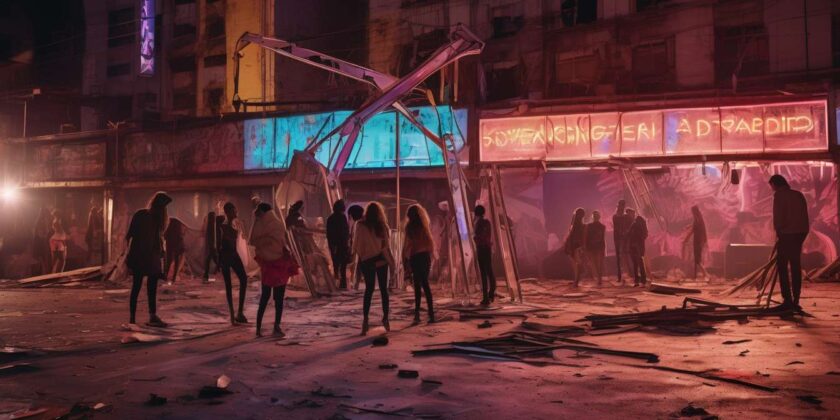
The problem: Planning meetings and bulldozers are reshaping neighborhoods that once hosted late-night rhythms, local instructors, and impromptu salsa circles. Redevelopment aimed at economic growth and modernization is erasing affordable rehearsal spaces, displacing long-standing venues, and interrupting cultural ecosystems that sustained established dance districts.
Competing priorities: As stakeholders—dancers, business owners, residents, and city planners—we face a tension between preserving artistic heritage and responding to demands for housing, parking, and commercial profit.
Community impact: This conflict fractures communities built around shared practice and intergenerational transmission of technique, leaving emerging artists with fewer entry points and audiences with fragmented experiences.
Broader consequences: The effects extend beyond performance schedules to livelihoods, identity, and the informal networks that enabled mentorship and collaboration.
What must be examined: Recognizing the problem’s complexity, we need to interrogate policy choices, zoning decisions, and investment models that privilege short-term returns over cultural continuity.
Advocacy direction: We should push for strategies that balance development with the survival of dance ecosystems, including:
- Protecting affordable rehearsal and performance spaces.
- Incentivizing developers to include cultural-use provisions.
- Creating zoning overlays or cultural districts that preserve artistic activity.
- Supporting funding and business models tailored to small, grassroots arts organizations.
- Engaging dancers and community members in planning processes.
Historical Roots of Dance Districts
We trace dance districts’ origins to the late 19th and early 20th centuries, when migration, industrialization, and nightlife culture fused to create concentrated centers of music, social dancing, and community gathering.
Neighborhoods transformed as newcomers brought rhythms, steps, and rituals, filling halls, storefronts, and backyard parties.
Dance districts were built as places where identity could be shared and learned, where generations taught one another and affordable cultural spaces made creative life possible.
Volunteers, local musicians, and small entrepreneurs kept floors swinging despite hardship.
We value those collective efforts because they made belonging tangible:
- a familiar tune,
- a practiced turn,
- a neighbor’s steady hand.
We commit to honoring that lineage by supporting community-led preservation that prioritizes people over profit.
Preservation isn’t just about bricks or signage; it’s about protecting the everyday practices that animate a district.
By keeping those practices central, we can maintain welcoming places where everyone who wants to join can find a role and a rhythm.
Economic Pressures and Real Estate
We’re seeing rising rents and development pressures reshape neighborhoods.
Investors are eyeing land, new towers are changing foot traffic, and property taxes are rising faster than many small cultural operators can absorb.
As a result, venues, artists, and longtime residents are being forced to choose between relocation, adaptation, or closure.
We feel the squeeze together.
In response, we organize, share resources, and map risk so local voices guide decisions that affect our districts.
We advocate for zoning that protects performance spaces, for incentives that keep affordable cultural spaces viable, and for joint ownership models that let communities hold assets long-term.
We’ll push for transparent redevelopment plans, impact assessments, and funding streams that prioritize existing creative ecosystems.
By centering community-led preservation, we strengthen bonds among neighbors and artists, ensuring that dance districts remain places where people belong, practice, and pass traditions on.
Our collective action won’t stop change, but it can shape it so culture survives and thrives alongside thoughtful growth.
Loss of Affordable Spaces
Many beloved studios and rehearsal halls are disappearing as rents spike and landlords convert or sell properties.
This forces dancers and companies to scramble for affordable places to practice and perform.
We’re losing the physical anchors of our dance districts — rooms where beginners found confidence and companies refined work.
When affordable cultural spaces vanish, access narrows:
- rehearsal time is reduced,
- classes are fewer, and
- informal gatherings that build community disappear.
As a result, the web of mutual support frays.
We organize temporary responses, but they’re stopgaps:
- pop-up sessions in storefronts, and
- negotiated shared schedules to keep ensembles moving.
Long-term solutions are needed, so we’re pushing for community-led preservation measures:
- zoning protections to prevent conversion or demolition,
- nonprofit ownership models that prioritize cultural use, and
- subsidy programs that lock in affordable rents for artists.
We coordinate with neighbors, local businesses, and sympathetic policymakers to document needs and propose feasible solutions rooted in lived experience.
Preserving affordable cultural spaces in dance districts isn’t just pragmatic; it keeps practice and mentorship within reach for everyone who wants to belong and continue making work here.
Social and Cultural Impacts
Our neighborhoods lose more than rooms when studios vanish; we lose everyday rituals, cross-generational mentorship, and the informal networks that shape how people move, gather, and tell their stories.
When dance districts shrink, our shared calendars empty: weekly classes, impromptu rehearsals, and celebratory gatherings that anchored identity disappear.
We feel that loss in quieter ways too — fewer elders correcting posture, fewer teens finding safe expression, fewer neighbors greeting each other on the way to practice.
We need affordable cultural spaces so everyone can keep participating, not just those who can afford rising rents.
Preserving memory and technique matters as much as preserving square footage; community-led preservation efforts root choices in lived experience and keep traditions accessible.
Together, we can prioritize:
- inclusive programming
- sliding-scale tuition
- cooperative ownership models that keep doors open.
If we act collectively, dance districts can remain places where belonging is taught, embodied, and passed on — not erased by market forces beyond our control.
Zoning and Policy Failures
Too many zoning rules and policy gaps let developers prioritize profit over places where people rehearse, teach, and gather, and we need to change that.
Zoning codes often treat dance districts as interchangeable with retail or luxury housing, stripping protections that once kept rehearsal rooms and small theaters viable.
This loss is personal: these are where friendships form, techniques pass down, and cultural identity stays visible.
We can’t rely on goodwill alone. We need policies that explicitly recognize affordable cultural spaces as essential infrastructure, not optional amenities.
Key policy changes needed:
-
Zoning overlays and use protections.
- Create designations that prioritize cultural uses over purely commercial redevelopment.
- Prevent conversion of rehearsal and performance spaces into unrelated uses without public review.
-
Incentives tied to long-term affordability.
- Offer tax benefits, grants, or density bonuses conditioned on binding affordability covenants.
- Require long-term lease protections so landlords can’t displace communities overnight.
-
Enforceable rules with consequences.
- Ensure regulations have clear enforcement mechanisms to deter speculation.
- Close loopholes that allow developers to bypass cultural protections.
We believe in community-led preservation as a guiding principle.
Residents, artists, and small venue owners must have standing in planning decisions.
- Give community stakeholders formal input and veto power in matters affecting cultural spaces.
- Support capacity-building so local groups can effectively participate.
When planning centers the people who animate dance districts, these neighborhoods remain places we can all claim and sustain.
Models for Cultural Preservation
Proven community-based ownership models
We can look to several proven models—community land trusts, cultural conservancies, and nonprofit ownership structures—that keep rehearsal rooms and small theaters affordable and locally controlled.
By pooling resources and securing long-term leases or ownership, these models stabilize rents and protect creative uses from speculative pressure.
Shared stewardship and participatory governance
We build shared stewardship so dancers, teachers, and neighbors feel ownership over dance districts and their futures.
We prioritize transparency and participatory governance so every member has a voice in decisions about programming, maintenance, and access.
Flexible, multiuse space design
We design flexible spaces that serve classes, performances, and community gatherings, ensuring affordable cultural spaces remain active and welcoming.
Financial strategies to underwrite capital without displacement
Financial tools can underwrite capital costs while avoiding displacement:
- Mixed-income units
- Subsidy layering
- Social impact bonds
Linking preservation to local opportunity
We link preservation to local employment and education, creating pathways for emerging artists to grow here.
Community stewardship outcomes
When communities steward their own assets, cultural heritage is honored and sustained. These models aren’t one-size-fits-all, but they offer clear, actionable templates for community-led preservation that nurture belonging and resilience.
Community-Led Advocacy Strategies
Goal: organize residents, artists, and small venue owners to protect and expand creative space.
We’ll form coalitions that center lived experience.
- Conduct listening sessions that gather priorities from residents, artists, and venue owners.
- Create action teams that translate stories into concrete policy asks: zoning protections, rent stabilization for cultural tenants, and grants to sustain programming.
We’ll map assets across dance and cultural districts.
- Identify at-risk venues and potential partners.
- Deploy targeted campaigns that blend storytelling with policy briefs to build public and policymaker support.
We’ll build community-led advocacy capacity.
- Train spokespeople from within neighborhoods so advocacy feels authentic and locally owned.
- Use mixed strategies:
- Legal challenges when necessary.
- Ballot initiatives where feasible.
- Negotiation with developers to guarantee affordable cultural spaces in new projects.
We’ll secure and align funding with community goals.
- Pursue philanthropic and municipal funding tied to community-led preservation outcomes.
- Insist on accountability measures and long-term stewardship.
We’ll celebrate wins and iterate when plans fall short.
- Publicly celebrate successes to build momentum.
- Regularly review and adjust strategies to stay united and ensure our shared places of movement and memory endure.
Measuring Long-Term Resilience
To gauge long-term resilience, we’ll track clear indicators—like venue survival rates, programming longevity, and community access—and regularly report progress back to residents and partners.
We’ll set measurable targets for dance districts, including:
- A minimum percentage of original venues retained.
- Annual counts of community-led events.
- Sustained hours of public access to affordable cultural spaces.
Our evaluation combines quantitative metrics with lived experience.
- We pair numbers with stories from artists, staff, and neighbors so data reflects real impact.
- We publish concise annual dashboards and host open review sessions where everyone can question methods and suggest corrections.
Funding outcomes, policy shifts, tenant stability, and diversity of programming will feed into a resilience index we maintain together.
By centering community-led preservation, we keep authority with those who built these scenes and ensure decision-making is inclusive.
This approach helps us spot early risks, allocate support quickly, and celebrate wins that keep belonging visible.
Together we’ll use clear, shared measures to protect access, heritage, and the creative futures of our neighborhoods.
How have commercial landlords historically responded to tenant organizing efforts in dance districts, and what legal precedents affect those interactions?
Question: How have commercial landlords historically responded to tenant organizing in dance districts, and which legal precedents shape those interactions?
Historic landlord responses
Landlords commonly resist tenant organizing.
- Responses include evictions, lease nonrenewals, and selective enforcement of lease terms or local codes.
- Tactics often aim to discourage collective action or to replace organizing tenants with less-organized tenants.
Landlords sometimes negotiate under pressure.
- When organizing gains public attention, legal momentum, or political support, landlords may enter negotiations, offer concessions, or agree to new terms to avoid litigation or reputational harm.
Key legal precedents and doctrines
Limits on collective bargaining for independent tenants.
- Courts often treat commercial tenants who are independent businesses differently than employees, which can limit collective-bargaining protections available to tenants acting as a group.
- Organizing as independent commercial tenants typically does not trigger the same labor-law processes that protect employee unions.
Labor protections where performers qualify as employees.
- When performers or staff are legally employees, labor law protections apply — including collective bargaining rights, unfair labor practice remedies, and National Labor Relations Board (or equivalent state agency) jurisdiction.
- Whether dancers or other workers are employees versus independent contractors is fact-specific and a central legal question in disputes.
Anti-retaliation statutes and protections.
- Anti-retaliation laws (both tenant-protection and employment statutes, depending on context) can limit landlords’ ability to retaliate against tenants for protected organizing activity.
- These statutes often require plaintiffs to show a causal connection between organizing activity and adverse landlord actions.
Local tenancy, labor case law, and ordinances shape outcomes.
- Municipal ordinances (e.g., requiring just-cause eviction or regulating adult-entertainment venues) and local case law can strengthen tenant protections or provide specific enforcement mechanisms.
- Courts interpret the interaction of lease law, landlord-tenant statutes, and labor law on a case-by-case basis; outcomes depend on local precedents and statutory frameworks.
Practical implications
- Assess classification of workers — employee vs. independent contractor — because it determines available labor protections.
- Look to local ordinances and tenant-protection laws — some cities offer stronger anti-retaliation and just-cause eviction rules that limit landlord responses.
- Document causal links between organizing and adverse actions to pursue anti-retaliation claims.
- Consider public and political pressure as leverage — landlords have been more likely to negotiate when organizing attracts attention.
If you want, I can:
- Summarize key court cases and statutes in a specific jurisdiction.
- Draft sample legal strategies for tenants or landlords given different fact patterns.
- Provide a checklist for evaluating whether workers in a dance district are likely to be treated as employees or independent contractors.
What specific funding mechanisms exist (beyond grants and donations) to buy or permanently secure dance venues and rehearsal spaces?
You’re asking what funding options, beyond grants and donations, can buy or permanently secure dance venues and rehearsal spaces.
Below are viable alternatives and brief notes on how each can be used for acquisition or long-term control.
Community Land Trusts (CLTs)
- CLTs acquire and hold land in perpetuity, leasing space to arts organizations at affordable rates.
- Useful for separating ownership of land from buildings to keep spaces permanently affordable.
Social Impact Bonds (Pay-for-Success)
- Private investors provide upfront capital for a project; government repays with return if agreed social outcomes are met.
- Could fund acquisition or renovation if metrics (e.g., community participation, job creation) are measurable.
Low-Interest Loans from Community Development Financial Institutions (CDFIs)
- CDFIs provide mission-driven financing with better terms than commercial lenders.
- Suitable for capital purchases, renovations, and short-term bridge financing.
Tax-Credit Financing
- Historic Tax Credits
- Redevelopment of qualifying historic buildings can leverage federal/state tax credits to offset acquisition/rehab costs.
- New Markets Tax Credits (NMTC)
- Attracts private equity into low-income areas; can support purchase/rehab of community-serving facilities.
Program-Related Investments (PRIs) from Foundations
- Foundations make below-market investments (loans, equity) aligned with their charitable mission.
- PRIs can provide patient capital for purchase, predevelopment, or long-term financing.
Cooperative Ownership with Member Equity
- Artists and community members buy shares or pay equity to own and govern the building collectively.
- Promotes stewardship and can combine capital from many small investors.
Crowdfunding with Equity or Revenue Share
- Community investors receive equity stakes or a share of future revenue instead of donations.
- Good for engaging local supporters and raising smaller increments of capital quickly.
Municipal and Public Financing Tools
- Tax Increment Financing (TIF)
- Uses future tax gains from a redevelopment area to finance current acquisition/rehab.
- Affordable Housing / Community Facility Set-Asides
- Some municipal redevelopment projects include requirements or funding for community spaces that can be leveraged.
Hybrid Approaches and Practical Notes
- Combining tools often works best (e.g., CDFI loan + historic tax credits + CLT structure).
- Early legal and financial structuring is critical: consider ground leases, restrictive covenants, and governance terms to ensure permanence.
- Match the tool to context: neighborhood income level, building type (historic vs. new), expected revenue, and community control goals.
Next steps you can take
- Identify target property and community priorities.
- Run a feasibility pro forma to determine capital need and revenue potential.
- Consult with a CDFI, real estate attorney, or community development consultant to test applicable tools.
- Explore partnerships: local government, foundations for PRIs, and a CLT or cooperative anchor.
If you want, I can:
- Draft a sample financing structure combining two or three of these tools for a specific property scenario.
- List CDFIs, foundations, or municipal programs in a particular city or region.
How do changes in public transit routes or schedules tangibly influence attendance and revenue for dance venues?
Transit changes directly affect audience access and revenue.
We see changes in transit routes and schedules directly shift who can get to our shows and classes. When service is reduced or timing’s off, attendance drops, casual drop-ins shrink, and revenue falls; reliable, frequent stops boost ticket sales and class enrollments.
Increased travel time and cost push patrons away.
Altered routes can raise travel costs and time, pushing regulars away.
We respond with schedule and access adaptations.
- We adjust showtimes to match new transit windows.
- We create and distribute transit guides (maps, best-route tips).
- We promote carpooling to reduce barriers for groups.
- We offer online class options to retain participants who can’t travel.
Goal: maintain connection and revenue despite transit disruptions.
Conclusion
You’ve seen how redevelopment and rising rents reshape historic dance districts, eroding affordable spaces and community life.
If zoning and policy stay passive, culture will keep shrinking unless you act.
Support models that prioritize cultural preservation, push for stronger protections, and back community-led advocacy.
Measure success by long-term resilience, not short-term gains.
Keep fighting for inclusive, affordable spaces so dance can remain rooted, thriving, and accessible for generations.