
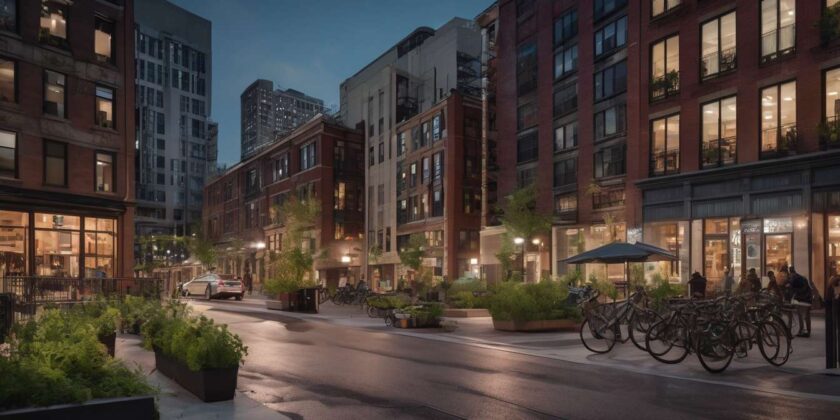
Kale and city zoning might seem unrelated, yet the same principles that shape where we grow food also determine where we gather after dark.
Urban planning threads through nightly economies, public safety, and cultural expression. We trace how street layouts, transit access, and mixed-use policies seed—or stifle—vibrant nightlife districts.
Examples of planning effects on nightlife:
- We have watched alleys transform into buzzing corridors when regulations encourage flexible storefronts.
- We have seen promising scenes fade when parking mandates and noise restrictions push venues out.
Our analysis connects multiple domains—public health, transportation engineering, and cultural policy—to show how subtle planning choices reverberate across social life.
By mapping these links, we aim to reveal practical levers for creating resilient, inclusive nightscapes:
- Encourage flexible use of ground-floor spaces to support creative businesses.
- Improve transit and pedestrian access to expand the pool of patrons and reduce late-night car use.
- Revisit parking and noise policies to balance resident needs with cultural vitality.
Together we will explore evidence, case studies, and design strategies that urban planners and local stakeholders can use to shape the long-term outlook for nightlife districts: places where creativity, commerce, and community coexist.
Planning and Nightlife Dynamics
We examine how planning decisions shape the rhythms, safety, and economic viability of nightlife districts.
Mixed-use zoning can knit together homes, venues, and services so people feel welcome at any hour.
- By intentionally blending uses, we create destinations where residents and visitors see themselves as part of a shared evening life rather than as isolated users.
We prioritize nighttime mobility that’s reliable and inclusive.
- Frequent transit
- Safe pedestrian routes
- Managed pick-up/drop-off points
Getting there and home again determines whether people return.
Placemaking choices signal that this is our space to enjoy together, not just a commercial strip.
- Lighting and seating
- Curated events
We balance activity and respite.
- Ensure nearby residents aren’t alienated
- Enable businesses to thrive
When we plan with care, nightlife districts become resilient social ecosystems:
- Socially connected
- Economically sustainable
- Safe and welcoming for everyone who wants to belong and participate in the city after dark.
Zoning and Land Use
We’ll shape zoning and land use to align permitted activities, building forms, and density with the 24-hour rhythms we want to encourage.
We’ll adopt mixed-use zoning that weaves homes, workplaces, and nightlife so neighborhoods feel alive and safe at night.
We’ll allow flexible ground-floor uses and upper-story housing to create places where people live, work, and gather together—strengthening belonging across hours.
We’ll calibrate building form standards to support human-scale streets, active frontages, and adaptable venues that can shift between daytime and evening uses without disruption.
Placemaking will guide how we arrange parks, plazas, and lighting to invite lingering, performance, and small-scale commerce.
We’ll set density targets that sustain diverse activity without overwhelming infrastructure, and craft occupancy and sound policies that protect residents while keeping venues viable.
We’ll coordinate zoning with nighttime mobility planning (details not provided here) to ensure the mix of uses truly functions around the clock and that everyone feels welcome in the district we build together.
Mobility and Accessibility
We will prioritize safe, reliable, and varied nighttime mobility options so people can get to, through, and home from nightlife districts at all hours.
- Extend transit service hours with coordinated schedules and late-night options (late buses, shared shuttles).
- Integrate affordable rideshare pickup zones to reduce cost and access barriers.
- Provide well-marked bike lanes and other active-mobility routes for safe, visible cycling at night.
We design connections that respect mixed-use zoning and link homes, venues, and services so people feel welcome and included.
- Plan walking catchment areas that connect residential and entertainment uses.
- Coordinate land use and mobility so destinations, housing, and services are physically and perceptually linked.
We make sidewalks continuous, accessible, and well-lit without turning streets into sterile corridors.
- Use placemaking to guide thoughtful seating, clear signage, and small-scale gathering spots that help people navigate and belong.
- Keep sidewalks accessible for people with disabilities and maintain unobstructed pedestrian flows.
We plan curb space and streetscape elements to support circulation and local business activity.
- Allocate curb space for deliveries and micromobility parking to keep sidewalks and roadways clear.
- Design for multimodal movement so pedestrians, micromobility, transit, and commercial vehicles can coexist safely.
We set measurable goals and monitor performance with community feedback.
- Establish targets for transit frequency, walking catchment coverage, and modal split after dark.
- Collect performance data and community input to evaluate and adjust strategies.
- Iterate on design based on outcomes to improve inclusion and safety.
By treating nighttime mobility as an inclusive design challenge tied to land use and placemaking, we create nightlife districts where everyone can move confidently, conveniently, and safely home.
Public Safety Design
Design public spaces, lighting, sightlines, and staffing so people feel safe and supported without turning nightlife districts into fortified, exclusionary zones.
Prioritize warm, even lighting that reduces shadows while preserving comfort and character.
Integrate mixed-use zoning to keep eyes on the street.
- Residences, shops, and venues create natural stewardship across day and night.
- Mixed uses encourage constant presence and informal surveillance.
Plan patrols and community ambassadors who know the neighborhood.
- Train staff to communicate respectfully and de-escalate conflicts rather than intimidate.
- Use ambassadors to connect visitors with resources and local information.
Improve nighttime mobility with clear wayfinding and safe transit infrastructure.
- Well-lit transit stops.
- Curb treatments and pathways that guide pedestrians and cyclists safely.
Use placemaking to activate corners and create informal gathering spots.
- Design seating, pocket parks, and performance spaces that invite mingling.
- Encourage programming that attracts neighbors and visitors, fostering mutual care.
Set measurable safety goals and involve the community in reviewing outcomes.
- Define metrics such as incident response times and perceived safety survey results.
- Regularly review data with local businesses and residents and adjust strategies accordingly.
Balance deterrence with welcome to reinforce belonging, accessibility, and shared responsibility.
- Ensure design choices do not exclude anyone from the district’s vibrant life.
- Favor interventions that promote inclusion while maintaining safety.
Noise and Environmental Policy
We will set clear noise and environmental standards that balance vibrant nightlife with residents’ health.
Key elements:
- Measurable limits — decibel caps and pollutant thresholds tied to time of night and neighborhood context.
- Targeted mitigation — interventions triggered when limits are exceeded.
- Ongoing community feedback — regular surveys, public hearings, and input channels to adjust standards over time.
We affirm that mixed-use zoning can work when we design soundscapes that respect homes and venues alike.
Actions:
- Map sensitive receptors — identify homes, hospitals, schools, and other noise‑sensitive sites.
- Assign decibel caps by block — tailor limits to local conditions rather than using a one‑size‑fits‑all approach.
- Install monitoring stations — continuous sound and air-quality sensors with transparent data sharing so residents and businesses see real-time conditions.
We will invest in placemaking that absorbs and redirects noise so nightlife feels lively without overwhelming neighbors.
Examples of interventions:
- Green buffers — trees, hedges, and planted berms that reduce sound transmission.
- Acoustic street furniture — benches, screens, and surfaces designed to dampen noise.
- Strategic stage placement — orienting performance spaces and using directional speakers to control sound spread.
We will prioritize nighttime mobility measures that reduce idling vehicles and emissions.
Measures include:
- Optimized transit schedules to provide reliable late‑night service.
- Night buses and extended service hours to reduce private car use.
- Designated pickup/drop‑off zones located away from quiet courtyards and residential façades.
We will create mediation forums where residents, business owners, and planners co-govern enforcement and adaptive mitigation.
Forum structure:
- Regularly scheduled meetings with rotating representation.
- Clear escalation pathways for complaints and rapid response teams.
- A mechanism to pilot and scale adaptive solutions based on lived experience.
Together we will build standards that sustain cultural life, protect health, and foster a sense of belonging across the district.
Outcome goals:
- Maintain a vibrant nightlife economy.
- Reduce sleep disruption and health impacts for residents.
- Create transparent, participatory governance so everyone feels included in decisions.
Economic Resilience Strategies
We will strengthen the district’s economic resilience by diversifying revenue streams, supporting small businesses, and creating contingency plans to withstand shocks to nightlife activity.
Encourage mixed-use zoning so venues, residences, and daytime commerce reinforce one another, smoothing income across hours and seasons.
Support local entrepreneurs through targeted programs:
- Microgrants to reduce startup and pivot costs.
- Shared services (bookkeeping, POS, marketing) to cut overhead.
- Cooperative marketing to boost visibility and create economies of scale.
Improve nighttime mobility by coordinating with transit agencies:
- Late-night buses and extended service.
- Expanded bike lanes and secure bike parking.
- Safe-ride programs and partnerships with rideshare providers.
Adopt adaptable licensing and pop-up policies that let businesses test concepts and shift formats as demand changes, reducing regulatory friction for experimentation.
Build financial safety nets that lower risk for small operators:
- Emergency funds for short-term shocks.
- Business continuity training to improve preparedness.
- Bundled or group insurance options to reduce individual premiums.
Measure outcomes with clear indicators to guide adjustments and accountability:
- Employment retention.
- Occupancy and vacancy rates.
- Evening footfall and customer spend.
Center collaborative placemaking and equitable policy design so residents, operators, and stakeholders feel invested and supported—creating a nightlife district better able to weather future disruptions.
Cultural and Community Roles
We’ll nurture the district’s cultural and community roles by supporting diverse artistic programming, accessible public spaces, and platforms that let residents and operators shape the nighttime identity.
We’ll prioritize mixed-use zoning to encourage homes, studios, venues, and shops to coexist so neighbors feel invested and venues feel supported.
We’ll activate plazas, pocket parks, and sidewalks through placemaking that centers local creators, seasonal markets, and community-led performances, making evenings safe and welcoming.
We’ll improve nighttime mobility with reliable transit, well-lit bike lanes, and coordinated pickup zones so people of all ages can join events without isolation.
We’ll create regular co-design forums where residents, workers, and venue operators:
- co-design programming,
- agree on respectful behaviors, and
- share resources.
We’ll fund and support local cultural initiatives by:
- funding micro-grants for neighborhood art,
- encouraging culturally specific nights, and
- ensuring affordability for artists and long-time residents.
By weaving daily life and nighttime culture, we’ll build a district where everyone belongs, contributes, and finds a place after dark.
Governance and Implementation
Governance and shared responsibility
We’ll establish clear governance structures and measurable implementation steps so stakeholders share responsibility, timelines, and accountability for the district’s nighttime vision.
Collaborative council
We will set up a collaborative council that includes residents, business owners, transit agencies, and cultural groups so everyone feels seen and heard in decisions about mixed-use zoning and placemaking.
Phased action plans and transparency
We’ll build phased action plans with specific milestones — permitting targets, design reviews, lighting upgrades, and nighttime mobility improvements — and publish progress dashboards so trust grows through transparency.
Roles, conflict resolution, and community liaisons
We’ll assign roles for day-to-day management, conflict resolution, and emergency response, and we’ll create community liaisons to translate technical plans into accessible updates.
Pilot projects and scaling
We’ll fund pilot projects that test:
- shared streets
- extended transit hours
- public-space programming
Then scale successful pilots.
Performance metrics and regular review
We’ll adopt performance metrics tied to:
- safety
- equity
- economic vitality
- resident satisfaction
We’ll revisit policies regularly with inclusive workshops.
Overarching commitment
Together we’ll govern deliberately, implement consistently, and nurture a nightlife district where belonging guides every decision.
How do nightlife districts directly impact residential property values in adjacent neighborhoods over decades?
Question: We’re asking how nightlife districts affect nearby home values over decades.
Short answer: Vibrant nightlife can both raise and lower nearby property values depending on the balance between positive amenities and negative nuisances.
Key mechanisms that raise home values:
- Desirability and demand. Nightlife districts make areas attractive for residents who value entertainment, dining, and a lively street life.
- Mixed-use investment. Retail, restaurants, and housing development often follow nightlife growth, increasing local supply of amenities and improving market perception.
- Safety and amenities improvements. Public investment in lighting, policing, and streetscape upgrades to support nightlife can spill over into higher residential demand.
- Long-run neighborhood upgrading. Over decades, successful nightlife clusters can catalyze broader gentrification and quality-of-life improvements that push up prices.
Key mechanisms that suppress home values:
- Noise and late-night disturbances. Persistent noise, crowds, and traffic can make some homes less desirable for buyers seeking quiet.
- Transient crowds and parking stress. Short-term visitors, congestion, and parking competition impose recurring inconvenience on residents.
- Poor management or nuisance persistence. If regulators or businesses fail to control noise, litter, or crime, adjacent residential areas can experience long-term depreciation.
- Heterogeneous buyer preferences. Some buyer segments (families, retirees) may be priced out or avoid these areas, limiting demand from those groups.
Net effect over decades: The long-term impact depends on the dominant forces:
- If positive amenities, investment, and effective management prevail, demand and home values tend to increase as the area becomes desirable.
- If nuisances persist and management is weak, the negative effects can entrench and suppress values for nearby residential properties.
Implication for policy and planning:
- Proactive regulation and design (noise mitigation, parking management, business licensing) can maximize benefits and limit harms.
- Encouraging thoughtful mixed-use development and public-safety/streetscape investments helps channel nightlife’s positive economic effects into sustained property-value gains.
What specific design features have been proven to reduce antisocial behavior in nightlife areas without increasing policing?
We’re asking what design features cut antisocial behavior in nightlife areas without more policing.
Use well-lit, sightline-friendly streetscapes.
- Ensure even, glare-controlled lighting that illuminates sidewalks and entrances.
- Avoid blind spots by keeping building frontages transparent and minimizing tall, opaque obstacles.
Provide durable street furniture.
- Choose vandal-resistant benches, bollards, and bike racks placed to support activity without creating hiding places.
- Arrange seating to encourage legitimate use and natural surveillance.
Promote active ground-floor uses that keep spaces occupied.
- Encourage cafes, bars with outdoor seating, shops, and cultural venues to maintain a steady presence of people.
- Mix longer-hours uses with daytime activity to extend natural surveillance into the evening.
Add clear wayfinding, waste, and toilet facilities.
- Install visible signs and maps to reduce confusion and loitering.
- Provide well-maintained public toilets and sufficient bins to limit litter and related antisocial conduct.
Use landscaped buffers to reduce conflict.
- Plant low, maintained vegetation to separate pedestrian paths from traffic and create welcoming edges.
- Avoid dense planting that creates hiding spots; prefer low hedges and raised beds.
Favor flexible plazas for events while reducing alcoves.
- Design open, adaptable public spaces that host markets, performances, and gatherings to draw positive activity.
- Minimize recessed alcoves and secluded corners that enable antisocial behavior.
Create joined-up transport hubs so people move safely and feel connected.
- Co-locate taxi ranks, bus stops, bike-share docks, and pedestrian routes with clear sightlines and lighting.
- Design routes that encourage movement through well-used corridors rather than isolated cut-throughs.
How can smaller cities or towns with limited budgets build a nightlife identity that attracts creative industries?
Celebrate local character and low-cost assets.
We can start by repurposing vacant storefronts, hosting pop-up events, and supporting maker nights to activate underused spaces and build community energy.
Collaborate with artists, colleges, and small businesses.
We’ll offer affordable studio space, mentorship, and shared equipment through partnerships that lower startup costs and foster skill-sharing.
Promote inclusive events and simple wayfinding.
We’ll organize accessible programming and clear signage to make the area welcoming and easy to navigate for residents and visitors alike.
Enable growth through flexible zoning.
We’ll support adaptable zoning policies that allow creative enterprises to experiment and expand without burdensome regulations.
Tell a coherent story that attracts talent while keeping barriers low.
We’ll craft and promote a clear narrative about our place to attract visitors and talent, while intentionally keeping costs and barriers to entry low to preserve affordability and local character.
Conclusion
You shape the nightlife district’s future through planning choices that balance vibrancy with livability.
By aligning zoning, mobility, safety design, noise policy, economic supports, and cultural programming, you’ll create places that adapt over time.
Inclusive governance and clear implementation let stakeholders share responsibility and sustain nightlife’s economic and social benefits.
If you plan proactively and listen to diverse voices, your nightlife districts will remain resilient, safe, and culturally rich for years to come.