
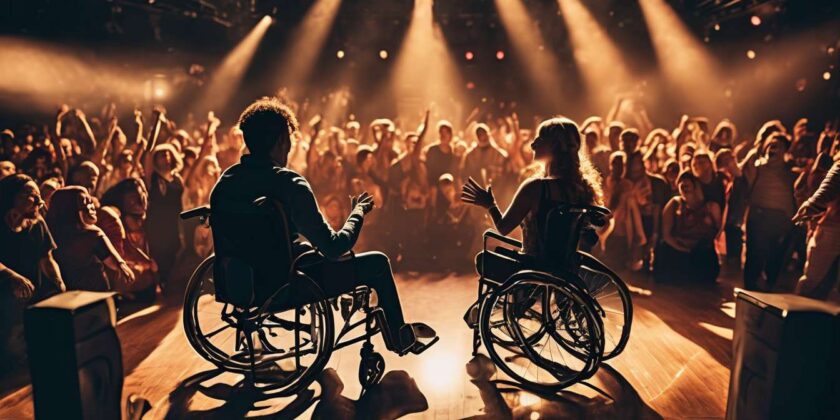
Understaffed venues, inaccessible seating, poor sightlines, and limited sensory accommodations have long kept many eager patrons from experiencing live dance.
We face the problem head-on and refuse to accept exclusion as inevitable.
We believe that live performance should welcome everyone, so this article examines practical accessibility improvements that expand participation at dance venues — from flexible ticketing and wheelchair-accessible stages to captioning, tactile tours, and trained front-of-house staff.
We confront operational, architectural, and attitudinal barriers that venues report as costly or complex, and we present evidence that thoughtful investments increase attendance, community engagement, and artistic diversity.
By centering the voices of disabled artists and audience members, we illustrate how collaborative design and policy changes transform spaces into places of belonging.
Our goal is to offer actionable steps and real-world examples so that venue managers, producers, and advocates can move from identifying problems to implementing inclusive solutions that enrich the live dance experience for everyone.
Understanding Barriers
We need to identify the physical, sensory, and social barriers that keep people from attending live dance events.
Physical barriers
- Map stairs, narrow aisles, and sightline issues so we can fix them together.
- Note inaccessible venues and limited accessible seating — these send a message that some of us aren’t expected.
Sensory barriers
- Listen for sensory challenges such as loud percussion, bright strobes, and poorly signposted quiet spaces.
- Offering sensory accommodations shows we value comfort and inclusion.
Social barriers
- Identify ticketing systems that force rigid arrival times, unclear policies, or unwelcoming staff — these can isolate community members.
- While we won’t delve into flexible ticketing details here, note that rigid systems reduce participation and create stress.
Community engagement and next steps
- Engage diverse community members to share lived experience and collect concrete examples.
- Prioritize changes that let everyone enjoy performances without extra effort.
By naming these barriers clearly, we make practical plans that invite everyone to belong and celebrate dance together.
Flexible Ticketing
We should offer ticketing options that let people arrive when they need to, change plans without penalty, or reserve transition times so everyone can attend with less stress.
We’ll create flexible ticketing that includes timed entry, easy exchanges, and partial refunds so unexpected needs don’t block participation.
By bundling options for accessible seating and spaces for companions, we make choices clear and equitable at purchase.
We’ll highlight sensory accommodations—quiet rooms, low-sensory sections, and notice of lighting or sound—to help patrons choose seats that fit their needs.
Our policies will be simple, visible, and human-centered:
- Refunds or transfers without onerous forms.
- Staff contacts for last-minute support.
- Clear maps showing entrances, routes, and nearby amenities.
We’ll invite feedback and adjust pricing tiers so accessibility options aren’t punitive.
When tickets respect varied arrival times, transitions, and sensory needs, more people feel welcome and included.
We’re building ticketing systems that treat everyone’s attendance as valued, not exceptional.
Accessible Seating
Design goal: We’ll design seating that gives people clear choices for visibility, mobility, companion access, and sensory needs so everyone can enjoy performances without barriers.
Accessible seating distribution: We offer accessible seating across price tiers and sightlines so guests can choose locations that fit their preferences and budgets.
Physical features and placement:
- We’ll clearly mark transfer spaces, removable seats, and spaces wide enough for wheelchairs.
- We’ll keep companion spots adjacent so no one feels separated from their group.
Ticketing and staff support:
- We coordinate accessible seating with flexible ticketing to allow exchanges or row changes when needs arise.
- We’ll train staff to manage these requests respectfully and promptly.
Information and customer support:
- We include seating maps online with measurements and photos.
- We’ll provide phone and chat support to help patrons select the best seats.
Scope and focus: While we support sensory accommodations in other venue areas, here we focus on physical layout, clear wayfinding, and unobstructed sightlines.
Outcome: Our goal is to create seating that communicates welcome, dignity, and belonging before the lights even come up.
Sensory Accommodations
Sensory supports offered
We’ll offer a range of sensory supports—like quiet zones, low‑stimulus seating areas, clear signage for audio/visual intensity, and loaner sensory tools—so patrons with sensory needs can enjoy performances comfortably.
Accessible pathways and seating
We create pathways where people feel seen and safe: ushers will guide guests to accessible seating positioned for minimal crowding and easy exit.
Staff training and discreet assistance
We’ll train staff to recognize sensory distress and to offer discreet assistance, signaling options, or calming strategies without drawing attention.
Published sensory guide
We’ll publish a sensory guide online and at the venue outlining lighting levels, anticipated crowd noise, and quiet breaks, so guests can plan visits confidently.
Flexible ticketing and reservation options
We’ll offer flexible ticketing that lets patrons:
- Change seats.
- Swap dates.
- Reserve quiet‑zone spots without penalty.
This reduces anxiety about commitment.
Maps and clearly labeled loaner items
We’ll include maps indicating sensory supports and clearly label loaner items like noise‑reducing headphones or fidget tools.
Why this matters
By centering sensory accommodations in policy and practice, we’ll make dance events welcoming and predictable, so everyone can join and belong without compromising comfort.
Visual and Audio Access
We will provide clear audio descriptions, captioning, and amplified assistive listening options so patrons with hearing or vision differences can fully engage with performances.
We will map and label accessible seating near sight lines, sound hubs, and entryways to reduce navigation stress.
We will offer tactile guides and program copies in large print or braille.
We will coordinate sensory accommodations such as quiet rooms and low‑lighting entrances so everyone can arrive and settle comfortably.
We will ensure captioning is reliable and synchronized, and we will test assistive listening systems before every show.
We will publish clear instructions online and at the venue for:
- how to use devices
- where to pick up radios or headsets
- how to request audio description headsets
We will pair flexible ticketing with accessibility options, allowing patrons to:
- change seats without penalty
- exchange dates without penalty
- make last‑minute adjustments when needs arise
We will invite feedback after events and act on it, because belonging grows when people see their needs met consistently.
Our goal is straightforward: make dance accessible to more bodies and senses so everyone can participate with dignity and ease.
Staff Training
Training scope and goal
We’ll train all front‑of‑house, technical, and administrative staff in disability awareness, communication best practices, and the practical use of accessibility tools so they can confidently support patrons’ needs.
We’ll run interactive workshops and scenario drills that cover greeting patrons, guiding visitors to accessible seating, and responding to requests for sensory accommodations without hesitation.
We’ll teach ticketing teams how to offer flexible ticketing options, process last‑minute changes, and document access needs securely so patrons feel seen and respected.
Lived-experience co‑training
We’ll include people with lived experience as co‑trainers, so staff learn directly from community voices and build genuine empathy.
Assessment, feedback, and refresh
We’ll assess competency with practical tests and anonymous feedback loops, then refresh training regularly to reflect evolving needs.
Onboarding and quick references
We’ll pair new hires with mentors skilled in inclusive service and keep quick‑reference guides at workstations.
Outcome
By investing in clear, practiced skills rather than theory, we’ll make dance venues warmer, more dependable places where everyone belongs and can participate fully.
Community Partnerships
Build lasting partnerships with disability organizations, advocacy groups, and community leaders to co-create programs, outreach, and feedback channels that broaden participation at live dance events.
Invite partners into planning and rehearsal processes.
- Co-design accessible seating layouts.
- Develop sensory accommodations (e.g., quiet rooms, sensory guides).
- Pilot flexible ticketing options (e.g., pay-what-you-can, companion tickets).
Listen and act together to ensure the venue feels welcoming and reliable.
- Establish clear feedback loops for rapid adjustments (e.g., quieter lobby spaces, companion seating).
- Publicize commitments and changes so attendees know what to expect and that the organization is accountable.
Share resources and provide training so community ambassadors can guide guests and extend outreach.
- Offer staff and volunteer training on disability awareness and accessible customer service.
- Promote events through trusted community networks to reach people who often feel excluded.
Coordinate volunteer and peer-support programs with local groups for event days.
- Recruit and schedule volunteers from partner organizations.
- Provide on-site peer support and navigation for guests who request it.
Cultivate mutual trust: partners bring lived experience; the venue provides platform and staffing.
- Treat partners as equal co-creators in program design and evaluation.
- Use partnership outcomes to make dance events more inclusive and joyful for everyone.
Measuring Impact
Goal: Understand whether accessibility efforts increase participation and satisfaction.
Approach — metrics, feedback, and data analysis
We’ll track clear metrics, collect participant feedback, and analyze attendance and experience data to measure impact.
What we’ll measure
-
Attendance changes
- Measure changes in attendance from historically underrepresented groups.
- Track percentage increases in first-time attendees with access needs.
-
Use of accessible services
- Monitor use of accessible seating.
- Log requests for sensory accommodations to compare need and provision.
-
Flexible ticketing uptake
- Track how often patrons use transfer, refund, or reserved time options.
- Correlate flexible-ticketing use with repeat attendance.
Feedback collection
- We’ll gather short, accessible surveys.
- We’ll hold listening sessions so people feel seen and safe sharing honest feedback.
- We’ll anonymize data before analysis.
Analysis, transparency, and action
- Analyze patterns in attendance, satisfaction, complaints, and accommodation requests to identify remaining barriers.
- Share findings with community partners to build trust and accountability.
- Adjust practices when patterns show barriers remain and celebrate measurable progress.
Key indicators
- Satisfaction scores.
- Percentage increases in first-time attendees with access needs.
- Reduced complaint rates.
By being transparent about methods and results, we’ll build trust, celebrate progress, and stay accountable to everyone who wants to belong at our dance events.
How can individuals with hidden disabilities (e.g., chronic pain, PTSD, autism) best communicate their needs to venue staff before arriving?
Goal: Tell venue staff about hidden disability needs before arrival so they can provide appropriate accommodations and support.
Key points to include in your message
1. Briefly introduce yourself and purpose.
- State your name and the date/time of your visit or event.
- Say you have a hidden disability and would like to request accommodations.
2. Clearly request specific accommodations.
- List what you need, for example:
- Quiet or low-sensory area (a quieter entrance, waiting room, or seating away from crowds).
- Reserved or accessible seating (near exits, aisle seating, or a particular spot).
- Sensory warnings or advance notice (alerts before loud noises, flashing lights, or stage effects).
- Pacing or rest breaks (if the visit or event is long).
- If there are alternatives that would work, list them briefly.
3. Share communication preferences.
- State how you prefer to be contacted (email, phone, text, SMS, or in-person).
- Note any assistive communication methods you use (plain language, written notes, large print, or a support person).
4. Describe triggers or limitations (briefly and specifically).
- Mention any specific triggers (e.g., sudden loud noises, bright flashing lights, crowded spaces).
- Note physical limitations like pain tolerance, mobility fatigue, or need for seating/rest.
5. Ask for a point of contact on arrival.
- Request the name and role of someone you can meet when you arrive or a direct phone number.
- Ask if there’s a quiet place to wait or a staff member who can escort you.
6. Keep tone positive and thankful.
- Use clear, confident language that assumes cooperation.
- Thank them in advance and note that the support helps you participate and feel welcome.
Suggested short email template
Hello [Venue name / Contact name],
My name is [Your name]. I will be attending [event/visit] on [date and time]. I have a hidden disability and would like to request a few accommodations so I can attend comfortably:
- Quiet/low-sensory area or a quieter entrance/holding area.
- Reserved/accessible seating (near exits or aisle seating).
- Advance sensory warnings for loud noises or flashing lights.
- Option for short rest breaks or a place to sit if needed.
My preferred contact method is [email/phone/text]. I am sensitive to [briefly list triggers], and I may need [note any limits, e.g., frequent seating, avoidance of crowds]. Could you please let me know who I should meet on arrival (name/role) or provide a phone number for the staff member who can assist me?
Thank you for your help — I appreciate your support in making this visit accessible.
Kind regards,[Your name]
[Preferred contact info]
Tips for phone calls
- Be concise: state who you are, when you’ll attend, and the specific accommodations.
- Ask for the name of the person who handles accessibility or front-of-house.
- Confirm any arrangements, and ask for a quick follow-up email so you have the contact and details in writing.
Final reminders
- Be specific but concise about needs and triggers.
- Offer alternatives if possible (helps staff find workable solutions).
- Keep the tone positive and grateful to foster cooperation and belonging.
What funding or grant opportunities exist for small independent dance venues to implement accessibility upgrades?
Goal: Identify funding sources to help small dance venues pay for accessibility upgrades.
Local arts councils and municipal sources
- Many city or county arts councils offer small capital grants or technical assistance for venue improvements.
- Local cultural affairs departments sometimes have earmarked funds for accessibility or equity initiatives.
- Municipal ADA improvement or public works programs may provide grants or low-interest loans for accessibility projects.
State-level disability and arts grant programs
- State arts agencies often administer capital or accessibility grants; check for specific ADA or access line items.
- State vocational rehabilitation or disability services agencies sometimes fund accessibility improvements that increase public access.
- Some states have special block grants or matching programs for cultural facilities.
Federal and national grant programs
- National Endowment for the Arts (NEA) — capital and creative placemaking grants, plus partnerships that can support access improvements.
- Institute of Museum and Library Services (IMLS) — facility and accessibility funding for cultural organizations (museums, community cultural spaces).
- Community Development Block Grants (CDBG) — administered by local governments, can fund accessibility improvements that benefit low- and moderate-income communities.
- Federal ADA-related funding streams — occasional competitive opportunities for improving accessibility in public venues.
Private foundations and philanthropic sources
- Large foundations with arts or access priorities (examples to research: Doris Duke Foundation, Mellon Foundation) may fund venue upgrades, equity, or audience access initiatives.
- Community foundations and regional family foundations often have smaller, accessible grants for capital projects and inclusion efforts.
- Corporate giving programs (local businesses, healthcare systems) may support community accessibility projects.
Partnerships and collaborative proposals
- Partner with universities (arts departments, architecture or accessibility labs) to access research grants or in-kind labor and technical expertise.
- Collaborate with health organizations, rehabilitation centers, or disability advocacy groups for joint proposals that emphasize community health and inclusion.
- Form consortia with other small venues to apply for larger regional grants.
Crowdfunding and community fundraising
- Use crowdfunding platforms to raise matching funds or demonstrate local support required by many grants.
- Combine crowdfunding with community events, membership drives, and benefit performances to boost visibility and engagement.
Tax credits, incentives, and matching funds
- Investigate federal or state tax credits for accessibility improvements or historic preservation (if applicable).
- Look for grant programs that require or provide matching funds; use crowdfunding, local sponsors, or in-kind donations to meet matches.
- Ask local governments about fee waivers, expedited permitting, or tax abatements that reduce project costs.
Next steps (recommended approach)
- Perform a local scan: contact your city arts office, county government, and state arts agency to identify immediate opportunities.
- Create a project scope and budget: define the accessibility upgrades, cost estimates, and timeline to make applications stronger.
- Build partnerships: reach out to disability organizations, universities, and potential funders to develop collaborative applications.
- Pursue multiple streams: combine local grants, state/federal programs, foundation support, and community fundraising to cover total costs.
If you’d like, I can draft a funding search checklist tailored to your city/state, or draft a short template grant narrative/one-page budget you can adapt for applications.
Are assistive devices (e.g., wheelchairs, hearing loops, fidget tools) available to borrow at venues, and how can someone reserve them in advance?
Venues often provide assistive devices such as wheelchairs, hearing loops, and fidget tools available to borrow.
Contact the box office or accessibility coordinator ahead of time — most venues allow reservations by phone or email, and sometimes via an online form.
Ask about pickup, return, and any ID or deposit requirements so you know what to expect when you arrive and when you leave.
If a needed device isn’t listed, request accommodations — venues usually make efforts to help you feel welcome and included.
Conclusion
You’re helping make live dance venues welcoming to everyone by removing barriers and offering flexible ticketing, accessible seating, and sensory accommodations.
You’re ensuring visual and audio access, training staff, and building community partnerships that sustain inclusion.
As you measure impact, you’ll see broader participation, richer audience experiences, and stronger community ties.
Keep prioritizing accessibility — it not only expands who can attend, but also deepens the vibrancy and resilience of the dance scene for everyone.